
Yes, hooking up a new faucet sprayer hose in your kitchen sink is a manageable DIY task. This guide will show you exactly how to connect pull-down sprayer hose units or attach kitchen faucet sprayer parts, even if you are installing new sink sprayer hose components for the first time. We cover everything from basic preparation to the final tight connection for your kitchen faucet hose replacement.
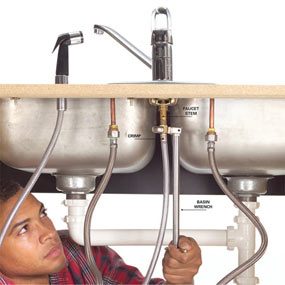
Image Source: images.tmbi.com
Preparing for Kitchen Faucet Hose Replacement
Before you start installing new sink sprayer hose parts, good preparation saves time and avoids frustration. Think of this as setting up your workspace right.
Essential Tools and Materials Check
Gather everything you need before you get under the sink. Having the right tools makes the job quick and safe.
| Tool/Material | Purpose | Notes |
|---|---|---|
| New Sprayer Hose & Head | The replacement parts | Ensure it matches your faucet model. |
| Adjustable Wrench or Pliers | Tightening nuts and fittings | Protect chrome parts with a rag. |
| Bucket or Container | Catching any spilled water | Essential for sink work. |
| Towels or Rags | Wiping up spills | Keep the area dry. |
| Flashlight or Headlamp | Seeing clearly under the sink | It gets dark down there! |
| Safety Glasses | Protecting your eyes | A good safety habit. |
| Plumber’s Tape (Teflon Tape) | Sealing threaded connections | Helps prevent leaks. |
Safety First: Shutting Off the Water Supply
This step is crucial for any kitchen faucet hose replacement. You must stop the water flow completely.
- Locate the Shut-Off Valves: Look directly under the sink cabinet. You should see two small valves connected to the hot and cold water lines.
- Turn Off the Water: Turn these valves clockwise until they stop. Do not overtighten them.
- Test the Faucet: Turn on the existing faucet handles (both hot and cold) above the sink. Let any remaining water drain out completely. This confirms the water is off.
Deciphering the Old Sprayer Hose Setup
If you are removing an old sprayer, you need to see how it was connected. Many modern faucets use a quick-connect system, while older ones use threaded fittings. This phase prepares you for the faucet sprayer hose hookup.
Disconnecting the Old Hose
If you are only replacing the hose and not the entire faucet body, focus on the connection point under the sink.
- For Quick-Connect Systems: These usually have a plastic clip or a collar you pull or push to release the hose. Look for markings or grooves indicating how to detach it. A gentle tug might release it after you press the collar.
- For Threaded Connections: Use your wrench or pliers to loosen the nut where the old hose meets the main faucet line or the supply line. Remember the rule: righty-tighty, lefty-loosey. Turn counter-clockwise to loosen. Keep your bucket ready, as a small amount of water might drip out.
The New Installation: Hooking Up Kitchen Sink Sprayer Hose
Now it is time to focus on how to connect faucet sprayer line pieces securely. This often involves the weighted hose part first, followed by the connection to the faucet body.
Step 1: Attaching the Hose to the Sprayer Head (If Separate)
Some replacement kits require you to attach kitchen faucet sprayer head to the hose first.
- Identify the Threads: Look at the end of the new hose and the bottom of the new sprayer head.
- Apply Plumber’s Tape: Wrap a few layers of plumber’s tape clockwise around the male threads of the hose connector. This acts as a sealant.
- Screw On the Head: Hand-tighten the sprayer head onto the hose connector. Once hand-tight, use pliers gently to give it another quarter turn for a snug fit. Do not crank down too hard, as this can damage plastic threads.
Step 2: Connecting to the Faucet Body (The Crucial Link)
This is often the trickiest part of the faucet sprayer hose hookup. You are either attaching sprayer hose to faucet body directly or connecting it to a central diverter valve underneath the sink.
Option A: Quick-Connect Systems
Modern pull-down faucets use this method for easy connect pull-down sprayer hose operations.
- Align the Ends: Take the end of the new hose (it usually has a specific plastic shape) and line it up with the receptacle port coming down from the main faucet assembly above the sink.
- Snap It In: Push the hose end firmly into the port until you hear or feel a distinct click. This sound confirms the mechanism has locked the hose securely. Give the hose a gentle tug to confirm it is locked.
Option B: Threaded Connections (Common for Side Sprayers or Older Models)
If your system uses threaded nuts, precision is key for a leak-free seal. This is vital for the undersink sprayer hose connection.
- Prepare the Threads: If you are connecting the hose to the faucet shank or a diverter valve coming from the faucet body, apply plumber’s tape clockwise to the threads of the fitting you are screwing onto.
- Hand Tighten: Start turning the coupling nut clockwise onto the threaded stub. Turn it as far as you can comfortably by hand.
- Final Tightening: Use your adjustable wrench or pliers. Tighten the nut slowly. You only need about one full turn past hand-tight. Over-tightening can crack the fitting or make future removal impossible. Check that the hose is not twisted while you tighten the nut.
Step 3: Installing the Counterweight (For Pull-Down Hoses)
If you are replacing kitchen faucet hose on a pull-down model, the weight is necessary to retract the sprayer head properly.
- Locate the Hose Section: Find the point on the flexible hose loop that rests lowest beneath the sink when the sprayer is extended. This is usually about 6 to 10 inches above the bottom of the cabinet.
- Attach the Clip/Weight: Most weights use a simple clip mechanism. Open the clip and secure it onto the hose at the determined spot.
- Test Retraction: Close the cabinet doors temporarily. Pull the sprayer head out fully, then let go. The weight should pull the hose back smoothly into its resting position inside the spout. Adjust the weight position slightly higher or lower until the retraction is perfect.
Finalizing the Faucet Sprayer Hose Hookup
Once all mechanical connections are made, you must check your work before restoring the water supply.
Checking Connections and Alignment
Take a moment to inspect your work, especially if you performed a kitchen faucet hose replacement.
- Are all nuts tight (but not overly tight)?
- Is the weight positioned correctly for good retraction?
- Is the hose running freely without kinks or rubbing against sharp cabinet edges?
Restoring Water Supply and Testing for Leaks
This is the moment of truth for your undersink sprayer hose connection.
- Slowly Turn Water Back On: Go back under the sink. Slowly turn the hot and cold shut-off valves counter-clockwise to restore water flow. Listen for any immediate sounds of rushing water that might indicate a major failure.
- Inspect Immediately: While the water pressure builds, look closely at every connection point you touched. Use a dry paper towel pressed against the fittings. If the towel stays dry, you succeeded!
- Test the Sprayer Function: Turn on the main faucet handle above the sink to a low setting. Check the stream.
- Engage the Sprayer: Activate the sprayer button or lever. Check the connection points again while the water is running through the sprayer line. If you notice any seepage or drips, turn the water off immediately.
Troubleshooting Minor Drips During Testing
If you see a small drip, don’t panic. This usually means the seal needs a small adjustment.
- If the drip is at a threaded connection, turn the water off. Use your wrench to tighten that specific nut just a tiny bit more (maybe 1/8th of a turn). Restore water and check again.
- If the drip is at a quick-connect fitting, push the hose down firmly again until you feel that solid click.
Fathoming Different Sprayer Types
Different faucets require slightly different approaches to hooking up kitchen sink sprayer hose components.
Side Sprayers vs. Pull-Down Sprayers
The main difference lies in where the hose connects and the retraction mechanism.
| Feature | Side Sprayer Connection | Pull-Down Sprayer Connection |
|---|---|---|
| Hose Path | Hose runs through a separate hole in the countertop/sink deck. | Hose runs up through the center of the main faucet body. |
| Connection Point | Connects to a dedicated output port on the faucet base plate under the sink. | Connects directly to a quick-connect receptacle inside the main faucet housing. |
| Retraction | Relies on the sprayer head’s weight and friction in its holder. | Relies on a dedicated, movable counterweight attached to the hose loop. |
For side sprayers, the process of how to connect faucet sprayer line involves connecting one end to the diverter outlet and the other end to the sprayer handle base that sits in the deck hole.
Single-Handle Faucets and the Diverter Valve
Many contemporary single-handle faucets use a diverter valve to switch flow between the main spout and the sprayer. When replacing kitchen faucet hose, you connect the new hose to the outlet port of this small valve. Ensure the valve itself is seated correctly in the faucet base, as a loose valve will cause leaks or prevent water from reaching the sprayer at all.
Advanced Tips for Seamless Installation
To ensure your new setup lasts a long time and performs flawlessly, keep these expert pointers in mind when attaching sprayer hose to faucet body components.
Lubricating Threads for Easier Future Work
When you are installing new sink sprayer hose parts, apply a tiny amount of plumber’s grease (silicone-based) to the threads of any metal-to-metal connection before wrapping with Teflon tape. This prevents corrosion and seizing. When it comes time for your next kitchen faucet hose replacement, these parts will come apart much easier.
Dealing with Old, Corroded Fittings
If you try to loosen an old fitting and it just won’t budge, stop pulling hard. Forcing it can snap the fitting off the faucet body, turning a simple hose replacement into a major repair.
- Use Penetrating Oil: Apply a small amount of penetrating oil (like WD-40, though specialized products work better) to the threads. Let it sit for 15–30 minutes.
- Apply Heat Carefully: Gently warm the nut with a hairdryer or a heat gun on a low setting (avoid open flame!). Heat expands the metal slightly, which can break the corrosion bond.
- Try Again: Attempt to loosen the nut while it is still slightly warm.
Verifying Weight Placement for Optimal Function
Proper weight placement is key for a good connect pull-down sprayer hose experience. The weight should be positioned so that when the sprayer is fully extended, the weight hangs freely without hitting the pipes, garbage disposal, or cabinet base. If the weight hits something, the hose won’t retract fully, leaving slack above the sink.
Final Check and Clean Up
After successfully hooking up kitchen sink sprayer hose and confirming no leaks under pressure:
- Tidy Up Under the Sink: Secure any loose lines with zip ties if needed, ensuring they aren’t dangling where they can be snagged.
- Wipe Down: Dry the entire area thoroughly.
- Test Several Times: Use the sprayer vigorously for a few minutes, running both hot and cold water to test the temperature seals as well.
A well-executed faucet sprayer hose hookup ensures years of easy dishwashing and rinsing. Take your time, follow these steps, and you will master the replacing kitchen faucet hose job yourself.
Frequently Asked Questions (FAQ)
Q: Can I connect a new pull-down sprayer hose to an old faucet body?
A: Generally, no. Pull-down systems rely on specific internal fittings (often quick-connect or proprietary weight systems). If you are replacing kitchen faucet hose, you usually need a hose set designed specifically for your faucet model or a universal kit designed to mimic that model’s connection style. Mixing systems often leads to leaks or failure to connect properly.
Q: What if my sprayer hose leaks right after I finish the connection?
A: If you just finished the faucet sprayer hose hookup, turn the water off immediately. The leak is almost always due to either: (1) The connection not being tight enough, or (2) The plumber’s tape not being applied correctly or thick enough. Reapply Teflon tape and tighten the fitting slightly more. If it’s a quick-connect, firmly push the pieces together again until you hear the lock engage.
Q: How do I know if I should use plumber’s tape when connecting the hose?
A: You should use plumber’s tape (Teflon tape) on any threaded, metal-to-metal connection, such as where the hose screws onto the faucet shank or diverter valve. Do not use it on plastic threads or quick-connect fittings, as these rely on rubber gaskets or plastic locking mechanisms to seal. This is important for a good undersink sprayer hose connection.
Q: Why won’t my new pull-down sprayer retract after installing it?
A: This issue is almost always related to the counterweight. Check these things: (1) Is the weight securely clipped onto the hose? (2) Is the weight positioned too high on the hose loop? (3) Is the weight hitting any pipes, the garbage disposal, or the cabinet bottom when you pull the sprayer out? Adjust the weight placement until the hose pulls back smoothly every time after connect pull-down sprayer hose.
Q: Do I need to replace the entire faucet if I replace the hose?
A: Not usually. If you are performing a kitchen faucet hose replacement, you only need to replace the hose and possibly the weight/clip. However, if the leak is coming from the main faucet body (the spout neck itself) rather than the hose connection, then the internal cartridge or seals need replacement, which might be easier done by installing a whole new faucet unit depending on the age and cost.