
Can you organize kitchen cabinets effectively? Yes, you absolutely can organize kitchen cabinets effectively using smart strategies and the right tools. Getting your kitchen cabinets in order can feel like a big job. But with a good plan, you can turn messy cupboards into neat storage spaces. This guide will show you simple, proven steps to make the most of every inch in your kitchen storage.
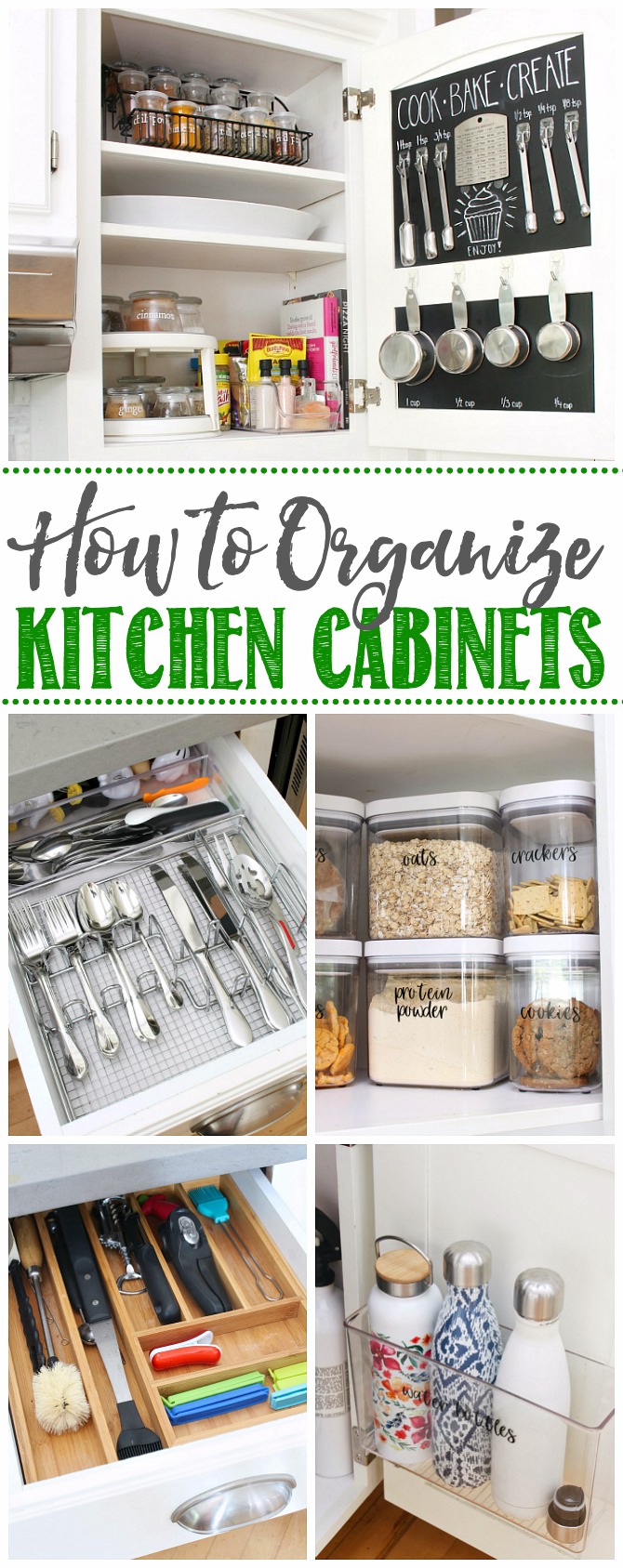
Image Source: www.cleanandscentsible.com
Preparing for Cabinet Organization: The First Steps
Before you start putting things back, you must clear out everything first. This is the most important step in decluttering kitchen cabinets. You cannot organize clutter; you can only rearrange it.
Emptying and Sorting Your Cabinets
Take every single item out of the cabinet you plan to work on. Put everything on a clean counter or the kitchen table. Now you can see exactly what you have.
Sort items into three main piles:
- Keep: Items you use often or genuinely need.
- Toss/Recycle: Broken items, empty containers, expired food, or things you haven’t used in over a year.
- Donate/Sell: Useful items you no longer need or duplicate tools.
Be ruthless when sorting. If you have three spatulas, keep the best two. If that spice jar is older than your last vacation, throw it out. Decluttering kitchen cabinets makes space instantly.
Cleaning and Measuring
Once empty, wipe down the inside of the cabinet. Use a mild cleaner. Make sure it is totally dry before putting anything back.
Next, grab your tape measure. Measure the height, width, and depth of each shelf. These measurements are vital for buying the right storage aids later. Knowing your dimensions prevents buying items that won’t fit, which is key for maximizing kitchen cupboard space.
Zone Planning: Assigning Homes for Everything
Think about how you use your kitchen. Where do you cook? Where do you eat? Organizing based on function, known as zone planning, makes finding things fast.
High-Frequency Zones (Eye Level)
The shelves between your shoulders and waist are prime real estate. Store items you grab daily here.
- Everyday dishes (plates, bowls).
- Most-used mugs.
- Spices and oils used during cooking.
Low Zones (Bottom Cabinets and Drawers)
Lower areas are best for heavy or less frequently used items. These spots prevent strain when lifting heavy things.
- Storing pots and pans in cabinets should happen down low. Heavy stacks are safer near the floor.
- Small appliances you use once a month (like a waffle maker).
- Cleaning supplies (keep these under the sink, separate from food).
High Zones (Top Shelves)
The highest shelves are for things you rarely need. These are harder to reach, so they should hold lighter, specialty items.
- Holiday dishes or serving platters.
- Specialty baking tins.
- Bulk paper goods.
Tools for Maximizing Kitchen Cupboard Space
Simply putting items back is not enough. You need tools to fight gravity and exploit unused air space. These tools are the heart of kitchen cabinet organization ideas.
Vertical Storage Solutions
The space between the shelf and the item above it is often wasted. Vertical kitchen storage makes use of this air.
Shelf Risers and Expandable Shelves
These wire or plastic racks instantly double the storage area on a flat shelf.
- Use risers for stacking plates or bowls neatly.
- Use them in the pantry shelf arrangement for canned goods, so you see the back rows easily.
Plate Racks and Dividers
Instead of stacking plates high, use vertical dividers. This lets you slide out one plate without knocking over the stack. This also works well for storing cutting boards upright.
Drawer Organization
Drawers can become junk pits quickly if not controlled. Drawer dividers for kitchen items are non-negotiable for good organization.
- Cutlery Trays: Use adjustable trays to separate forks, spoons, and knives.
- Deep Drawer Dividers: For larger utensils like whisks and ladles, use deep drawer dividers to keep them from tangling. Keep similar tools together (e.g., all baking tools in one section).
- Pegboard Systems: Some modern drawers come with peg systems. These let you customize compartments for oddly shaped items, like mixing bowls or small appliances.
Utilizing Doors and Walls
Cabinet doors offer hidden storage space that is often overlooked.
- Over-the-Door Racks: Attach narrow racks to the inside of pantry doors for spices, foil, plastic wrap, or cleaning cloths. This is excellent for small kitchen storage solutions.
- Command Hooks: Use these for hanging measuring cups or lightweight cleaning brushes inside the cabinet door.
Specific Cabinet Organization Strategies
Different types of cabinets need different approaches to ensure efficiency.
Organizing Upper Cabinets (Dishware and Glassware)
The goal here is easy access without breaking things.
- Nesting Items: Always nest bowls and cups where possible. Do not stack more than four high for safety.
- Glassware: Store wine glasses hanging from racks if your cabinet allows, or place them stem-side down on a non-slip shelf liner.
- Decanting: For items like dry goods (flour, sugar), moving them into clear, airtight containers makes them look uniform and keeps food fresh. This vastly improves the look of your pantry shelf arrangement.
Organizing Lower Cabinets (Pots, Pans, and Small Appliances)
This area deals with weight and awkward shapes. Safety and ease of access rule here.
Storing Pots and Pans in Cabinets
This is often the biggest challenge. Stacking pans creates instability and scratches.
| Method | Best For | Pros | Cons |
|---|---|---|---|
| Vertical Dividers/Racks | Pots, lids, baking sheets | Easy access; no stacking. | Requires deep cabinet space. |
| Tiered Shelves | Smaller saucepans | Maximizes height. | Still requires lifting. |
| Pull-Out Drawers | All sizes | Full access to the back. | Expensive modification. |
Always store lids vertically using a small rack, not stacked on top of the pots. If you have deep drawers, this is the best way to organize kitchen shelves for heavy cookware.
Optimizing Lazy Susan Use
The corner cabinet is notorious for dead space. Optimizing lazy susan use brings that hard-to-reach space forward.
- Decant or Decouple: Do not put heavy, loose items directly on the lazy susan. Use shallow bins or trays that sit on the turntable. This stops things from falling off the edge when it spins.
- Assign Zones: Dedicate one shelf of the lazy susan to baking goods (vanilla, sprinkles) and the other to oils and vinegars.
- Two-Tier Susans: If possible, use a two-tiered lazy susan for corner cabinets to utilize the vertical height.
Organizing the Spice Cabinet
Spices need to be visible. If you can’t see the label, you won’t use the spice.
- Tiered Spice Racks: These are excellent for standard cabinets, allowing you to see jars in the back row.
- Door Mounts: If you have a shallow cabinet, mount small racks directly to the inside of the door.
- Drawer Storage: If you use drawers, store spices flat, label-side up, using specialized drawer inserts. This is one of the most popular kitchen cabinet organization ideas.
Drawer Organization Deep Dive
Drawers offer contained organization, but require precise placement.
Utensil Drawers
Keep cooking utensils separate from eating utensils. If you have a large utensil drawer, use adjustable drawer dividers for kitchen tools to create specific slots for spatulas, ladles, and tongs. This stops them from migrating into the silverware section.
Junk Drawer Management
Even the junk drawer needs a system. Dedicate specific small boxes or bins inside the drawer for batteries, twist ties, measuring spoons, or takeout menus. If everything has a container, nothing rolls around.
Implementing Small Kitchen Storage Solutions
For those with limited space, every strategy must be high-impact.
- Slim Rolling Carts: If you have a narrow gap between the fridge and the wall, use a slim rolling cart for canned goods or condiments. This is an invaluable small kitchen storage solutions hack.
- Under-Shelf Baskets: These wire baskets hook onto an existing shelf, creating a shallow storage area underneath for things like plastic wrap boxes or aluminum foil.
- Stackable Bins with Handles: For upper cabinets, use clear, stackable bins. If you need something on the bottom bin, you lift the top bin out instead of having to move everything. The handles make retrieval easy.
Maintaining Your Organized Space
Organization is not a one-time event; it is a habit. To keep the system working:
- The “One In, One Out” Rule: When you buy a new gadget or tool, try to donate or toss an old, similar item.
- Regular Spot Checks: Once a month, spend ten minutes checking expiration dates in the pantry area or realigning crooked spice jars.
- Label Everything: If you use opaque bins or decant flour, label clearly. This ensures everyone in the house puts items back correctly, preserving your kitchen cabinet organization ideas.
Integrating Vertical Kitchen Storage Effectively
Vertical kitchen storage is crucial because most cabinets have far more vertical space than horizontal space.
Consider items that are naturally flat:
- Baking sheets
- Muffin tins
- Cutting boards
- Serving trays
These should always be stored vertically, using tension rods or wire dividers installed side-to-side on the cabinet floor. This keeps them upright and accessible, making them easy to slide out without lifting heavy stacks. This technique drastically improves maximizing kitchen cupboard space.
Fathoming the Best Way to Organize Kitchen Shelves
The best way to organize kitchen shelves always depends on accessibility and frequency of use.
Use this hierarchy when deciding placement:
- Most Used (Daily): Front and center, between eye and waist level.
- Moderately Used (Weekly/Monthly): Lower shelves or easy-to-reach lazy susans.
- Rarely Used (Yearly): Highest shelves or deep lower cabinets.
When buying shelf organizers, prioritize clear, stackable, or expandable options. Look for solutions that adapt to your needs rather than forcing your items into fixed spaces.
Putting It All Together: A Step-by-Step Review
To ensure success in your project, follow these phases:
Phase 1: Purge and Clean
* Remove all contents.
* Toss expired/broken items.
* Wipe down surfaces.
Phase 2: Measure and Plan
* Measure shelf heights and widths.
* Sketch a simple layout map for each cabinet based on zones.
Phase 3: Acquire Tools
* Purchase shelf risers, dividers, and door racks as needed. Focus on vertical kitchen storage.
Phase 4: Load Strategically
* Place heavy items low.
* Use dividers for vertical alignment.
* Employ drawer dividers for kitchen items.
* Ensure the pantry shelf arrangement allows airflow and visibility.
Phase 5: Maintain
* Establish a routine for quick tidying.
* Label all non-obvious containers.
By applying these methodical steps—from initial decluttering kitchen cabinets to implementing clever small kitchen storage solutions—you will achieve highly functional and attractive kitchen storage.
Frequently Asked Questions (FAQ) About Kitchen Cabinet Organization
How often should I declutter kitchen cabinets?
You should perform a major overhaul (emptying and sorting) once every 6 to 12 months. However, a quick check for expired items should happen every month when you do general kitchen cleaning.
What is the best way to organize mismatched food containers without lids?
The most effective method is to use a specific vertical divider rack for lids only. Place all lids upright in this rack. If you cannot find a matching base container after three months of checking, toss the orphaned lid or the unmatched container.
Can I use tension rods for organizing pots and pans?
Yes, tension rods are a fantastic, cheap vertical kitchen storage tool. You can place a tension rod horizontally across a cabinet floor to prop up baking sheets or cutting boards vertically, making them easy to grab.
What are some good kitchen cabinet organization ideas for deep cabinets?
For deep cabinets, use pull-out sliding drawers or bins that you can slide all the way out. If you cannot install drawers, use deep, clear bins with handles on the shelves. This lets you pull the entire bin forward to access items at the back, which helps greatly in maximizing kitchen cupboard space.
How do I keep my pantry shelf arrangement neat after unloading groceries?
Use clear, matching, labeled bins for categories (e.g., “Pasta,” “Baking Mixes”). Instead of placing loose items on the shelf, place the entire category into its bin. When you need pasta, you pull out the pasta bin, not ten different loose boxes.