
What should you avoid when picking or using a kitchen fire extinguisher? You must avoid using the wrong type of extinguisher for the fire. Also, never use water on grease fires. Choosing the right tool is key to safety.
The kitchen is a special place for fire risks. Cooking oils, grease, and electrical gadgets all pose a threat. Having the correct kitchen fire extinguisher types readily available is vital. But just having one isn’t enough. Knowing what not to do, and what not to buy, is equally important for preventing a small spark from becoming a big disaster. This guide helps you steer clear of common and dangerous mistakes when dealing with kitchen fires.
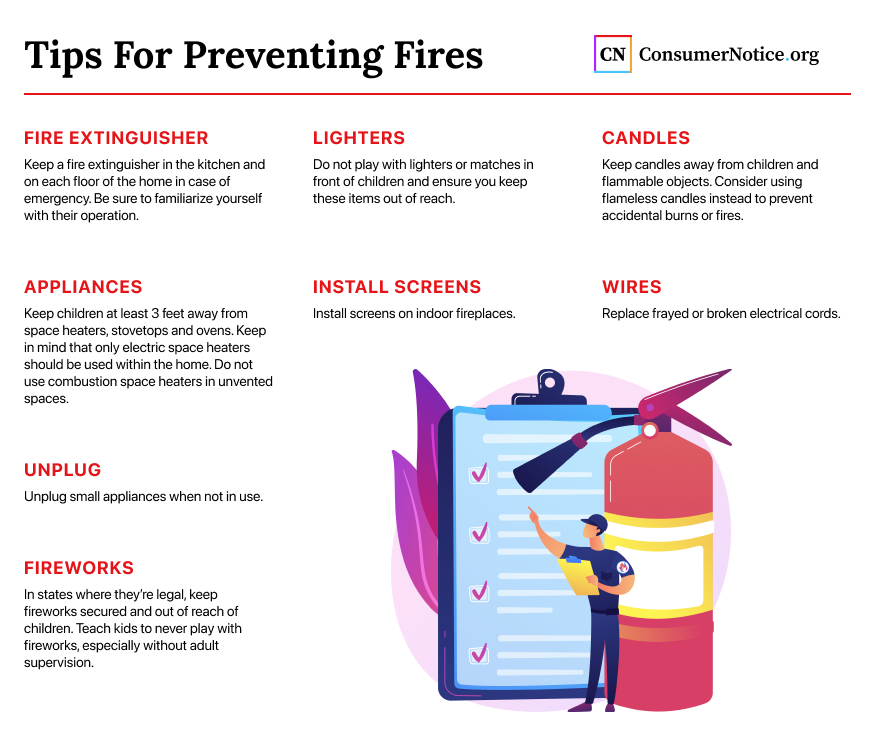
Image Source: www.consumernotice.org
Why Wrong Choices Lead to Danger
A fire needs three things to burn: fuel, heat, and oxygen. An extinguisher works by removing one or more of these. If you use the wrong tool, you might add fuel or spread the heat. This turns a manageable situation into an emergency.
Deciphering Extinguisher Classes: What Not to Choose
Fires are sorted into different classes based on what is burning. Using an extinguisher rated for the wrong class can make the fire much worse. People often grab the first can they see, which is a major pitfall.
Class A Fires: Ordinary Combustibles
These involve common things like wood, paper, or cloth. Most household extinguishers handle these well.
- What to Avoid: Do not rely solely on a Class A rated extinguisher for your kitchen. Kitchen fires are rarely just Class A.
Class B Fires: Flammable Liquids
These include gasoline or paint thinners. While less common in the immediate cooking area, they might be nearby in a garage connected to the kitchen.
Class C Fires: Electrical Equipment
These involve energized electrical gear. If you spray the wrong chemical on live wiring, you might get an electric shock.
Class D Fires: Combustible Metals
These are rare in a home kitchen. They involve metals like magnesium.
Class K Fires: The Kitchen Specialist
This is the most crucial class for cooking areas. Class K extinguishers are specifically designed for fires involving cooking oils and animal fats. These oils burn much hotter than regular flammable liquids.
- The Big Mistake: Thinking a standard dry chemical extinguisher kitchen model (often ABC rated) is enough for a deep fryer fire. While an ABC extinguisher might put out the flames momentarily, it often fails to cool the super-hot oil. The fire can restart instantly.
The Peril of Using Water on Kitchen Fires
This is perhaps the most dangerous mistake anyone can make in the kitchen. Using water on kitchen fires, especially those involving grease or oil, is a recipe for disaster.
The Science of Oil and Water
Oil and water do not mix. Oil is lighter than water. When you spray water onto burning oil, the water sinks to the bottom of the hot pan.
- The water rapidly heats up due to the intense temperature of the burning oil.
- The water instantly turns to steam.
- Steam takes up much more space than liquid water—about 1,700 times more volume.
- This explosive expansion throws the burning oil outward in a massive fireball.
This action spreads the fire quickly across the stove, counters, and potentially onto clothing. Never use a standard water extinguisher (Class A) in the kitchen if you suspect grease is involved.
Choosing Between Fire Blanket vs Extinguisher
Many people wonder whether a fire blanket vs extinguisher is better for the kitchen. Both have uses, but choosing the wrong one for the specific situation is a hazard.
When to Avoid the Fire Blanket
A fire blanket is excellent for smothering small fires contained in a pan. It cuts off oxygen supply directly. However, avoid using a blanket if:
- The fire is already large and outside the pan.
- You cannot safely approach the fire without severe burns.
- The fire is electrical. A wet or even non-conductive blanket might not fully secure the area if electricity is still involved.
When to Avoid the Extinguisher
While essential, an extinguisher requires proper aiming and technique. Avoid using a large extinguisher if the fire is tiny and perfectly contained in a small pot. Overspray can make a huge mess and sometimes spread minor spills.
The Critical Role of Grease Fire Extinguishers
For most modern kitchens, especially those using deep fryers or large amounts of cooking oil, a specialized grease fire extinguisher is necessary. These are typically wet chemical agents designed to tackle Class K fires.
What to Avoid in Grease Fire Extinguishers
When purchasing a Class K extinguisher, avoid buying one that lacks this specific rating.
- Avoid: Over-reliance on ABC Dry Chemical: As mentioned, ABC extinguishers use monoammonium phosphate. This powder can react poorly with hot grease, often failing to cool the oil sufficiently.
| Extinguisher Type | Primary Use | Kitchen Danger/Avoidance |
|---|---|---|
| Water (Class A) | Wood, Paper | DO NOT USE ON GREASE. Causes explosive spread. |
| Dry Chemical (ABC) | General Use | May not fully cool deep oil; risk of reignition. |
| Carbon Dioxide ($\text{CO}_2$) | Electrical, Liquid | Excellent for electrical, but does not prevent oil re-ignition. |
| Wet Chemical (Class K) | Cooking Oils/Fats | The necessary choice for deep fryers. Avoid using if not rated Class K. |
Issues with Incorrect Fire Extinguisher Chemical Compatibility
Different chemicals react differently to various fuels. Mixing chemicals or using the wrong one can be dangerous due to chemical reactions or simply ineffective cooling.
Avoiding Chemical Contamination
When storing extinguishers, ensure they are kept separate from incompatible materials. Although fire extinguishers are sealed units, improper handling or storage near corrosive materials can compromise the canister integrity over time.
The Problem with $\text{CO}_2$ Extinguishers in Kitchens
Carbon Dioxide ($\text{CO}_2$) extinguishers are great for electrical fires (Class C) because they leave no residue. However, for cooking oil fires, they only displace oxygen.
- Avoidance: Do not rely solely on $\text{CO}_2$ for a grease fire. Because the oil remains extremely hot, once the $\text{CO}_2$ disperses and oxygen returns, the fire will likely reignite.
Storage Errors: Where Not to Keep Your Extinguisher
Safe fire extinguisher storage is as crucial as having the right type. If you cannot reach it quickly or if it’s damaged, it is useless.
Locations to Strictly Avoid
- Inside Cabinets: Never store it behind doors that must be opened, especially if you are panicking. Time is critical.
- Above the Stove: Heat from the stove can damage the gauge or the extinguishing agent itself, making it ineffective when needed.
- In Remote Locations: Storing it in the basement or garage when the primary fire risk is the kitchen defeats the purpose.
- In Areas Prone to Freezing: Extreme cold can affect the pressure, especially in older models.
Best Practice: Mount the extinguisher near the primary exit route from the kitchen. This allows you to fight the fire while keeping your back to an escape path.
Misinterpreting Pressure Gauges and Maintenance
A damaged or uncharged extinguisher is just a heavy metal tube. Avoiding regular checks is a major mistake.
Not Checking the Gauge
Most modern extinguishers have a pressure gauge.
- Avoid: Ignoring a needle that falls outside the green zone. If the needle is too low, the discharge pressure won’t be strong enough to reach the fire effectively. If it is too high (rare, usually due to extreme heat exposure), the unit could rupture.
Ignoring Inspection Tags
Fire extinguishers require periodic professional inspection, especially in commercial settings, but residential units still need visual checks.
- Avoid: Forgetting the monthly visual check. Look for physical damage, corrosion, or a clogged nozzle. Check the seal to ensure it hasn’t been tampered with or accidentally used.
Smoke Detector Location: An Overlooked Safety Item
While not strictly part of the extinguisher itself, proper smoke detector location is vital because early warning allows you to address the fire when it is small enough for an extinguisher to handle.
Where to Avoid Placing Smoke Detectors
- Directly Above the Stove: Cooking fumes, steam, and smoke from normal cooking often trigger false alarms. This leads occupants to silence or remove the batteries—a dangerous habit.
- Too Far Away: Placing detectors only in distant hallways means the fire has grown significantly before an alarm sounds.
Best Placement: Install them in hallways leading away from the kitchen, and consider a heat alarm specifically designed for the kitchen area, which reacts to rapid temperature increases rather than smoke particles.
When Not to Fight the Fire: Knowing Your Limits
The single most important thing to avoid is trying to fight a fire that is too big or too dangerous. Extinguishers are designed for incipient stage fires—those that have just started.
Indicators That You Must Evacuate Immediately
If any of the following occur, drop the extinguisher and leave:
- The fire spreads beyond the container it started in (e.g., moves from the pan to the cabinets).
- You do not have a clear path to escape.
- The extinguisher runs out before the fire is completely out.
- The room begins to fill with smoke, making breathing difficult.
When in doubt, get out. Close the door behind you to slow the fire’s spread, and call emergency services immediately.
Comprehending Extinguisher Operation: P.A.S.S. Technique
Even the right extinguisher fails if used incorrectly. Avoiding confusion during a high-stress moment is key. Memorize the P.A.S.S. method.
Things to Avoid While Using the Extinguisher
- Aiming Too High: Do not aim at the flames flickering above the fuel source. Aim the nozzle low, at the base of the fire, where the fuel is burning.
- Standing Too Far Away: If you are too far back, the spray may not reach the base effectively, or the heat might overcome you before you can discharge enough agent.
- Using Short Bursts: Discharge the agent in one steady, continuous sweep across the base of the fire until it appears extinguished.
Final Review: The Checklist of Things to Avoid
To summarize the key pitfalls when dealing with kitchen fire safety and extinguishers:
| Category | Things to AVOID | Why Avoid It |
|---|---|---|
| Extinguisher Selection | Using Class A (Water) on grease. | Causes explosive steam expansion and throws burning oil everywhere. |
| Extinguisher Selection | Relying only on $\text{CO}_2$ for oil fires. | Does not cool the fuel; the fire will likely restart immediately. |
| Extinguisher Selection | Buying an extinguisher that is not Class K rated for deep fryers. | Standard agents are ineffective against high-temperature cooking fats. |
| Storage | Keeping the unit inside a closed cabinet or drawer. | Wastes crucial seconds needed for immediate access. |
| Maintenance | Ignoring the pressure gauge reading. | An uncharged unit is useless when needed most. |
| Action | Fighting a fire that has spread beyond the initial source. | The fire is too large; prioritize human safety and evacuation. |
| Action | Aiming the nozzle at the flames instead of the base. | The fuel source will continue to burn even if the flames are temporarily blocked. |
By proactively avoiding these mistakes—by choosing the correct Class K extinguishers, ensuring proper safe fire extinguisher storage, and never using water on kitchen fires—you significantly boost your kitchen safety and preparedness.
Frequently Asked Questions (FAQ)
Q: Can I use baking soda instead of a fire extinguisher on a small grease fire?
A: Yes, baking soda (sodium bicarbonate) can smother very small grease fires because it releases carbon dioxide when heated, starving the fire of oxygen. However, you need a very large amount, and it is less reliable than a proper grease fire extinguisher. Never use baking powder, flour, or sugar, as these can actually fuel the fire.
Q: How often should I check my kitchen fire extinguisher?
A: You should visually inspect your extinguisher monthly. Check the pressure gauge to ensure it is in the green zone, and make sure the pin and seal are intact. Professional servicing is usually recommended annually or as specified by the manufacturer.
Q: Is a dry chemical extinguisher kitchen use generally safe if I don’t have a Class K?
A: An ABC dry chemical extinguisher kitchen use is better than nothing for an emergency, but it is not ideal for deep oil fires. It might extinguish the visible flames, but the oil often stays hot enough to reignite once the powder settles. If you must use an ABC, try to smother the fire first (lid on) and then carefully apply the agent.
Q: Where is the best place to mount a kitchen fire extinguisher?
A: Mount it on a wall near the kitchen exit, usually 3 to 5 feet off the floor. This keeps it accessible but away from the direct heat and splatter zone of the cooking surface. Good smoke detector location complements this by giving you earlier warning.
Q: What is the difference between a fire blanket and a fire extinguisher in terms of use?
A: A fire blanket smothers the fire by cutting off oxygen supply directly on top of the fuel source, making it excellent for pan fires. An extinguisher sprays a chemical agent that interrupts the chemical reaction or cools the fuel. They are complementary tools, not direct replacements; know when to use the fire blanket vs extinguisher.